Food safetyAllergen management
Food allergen management plan: a practical UK template
Build a UK food-allergen management plan that connects suppliers, recipes, cross-contact controls, staff decisions and customer information.

At a glance
For a UK food business, an allergen management plan should name responsibility, keep written ingredient and recipe information current, control unintended allergen cross-contact, train every relevant role and define how a request or change is approved. In England, Wales and Northern Ireland, use the FSA’s current guidance and checklist; Scottish businesses should also check Food Standards Scotland guidance. A record supports the decision—it does not make a dish allergen-free.
Start with scope, law and one accountable owner
Write the plan for the real site and sales channels: seated service, takeaway, online ordering, catering and any prepacked-for-direct-sale food. The UK framework requires allergen information for prepacked and non-prepacked food, but the presentation rules differ. Record which nation the site is in and verify the competent authority guidance instead of assuming one page covers every UK jurisdiction.
Name a plan owner and a trained responsible person for each shift. The FSA checklist asks whether overall responsibility is clear and whether someone is available to manage allergy requests. Give that person authority to pause an order when a recipe, label or supplier specification cannot be verified.
Food Standards Agency · Allergen guidance for food businessesFood Standards Agency · Allergen checklist for food businesses
- Record the legal entity, site, UK nation and food formats.
- List who owns recipes, purchasing, menu publication and service.
- Define who can accept, modify or decline an allergy request.
- Set review triggers for recipes, suppliers, menus and incidents.
Create a controlled ingredient-to-menu record
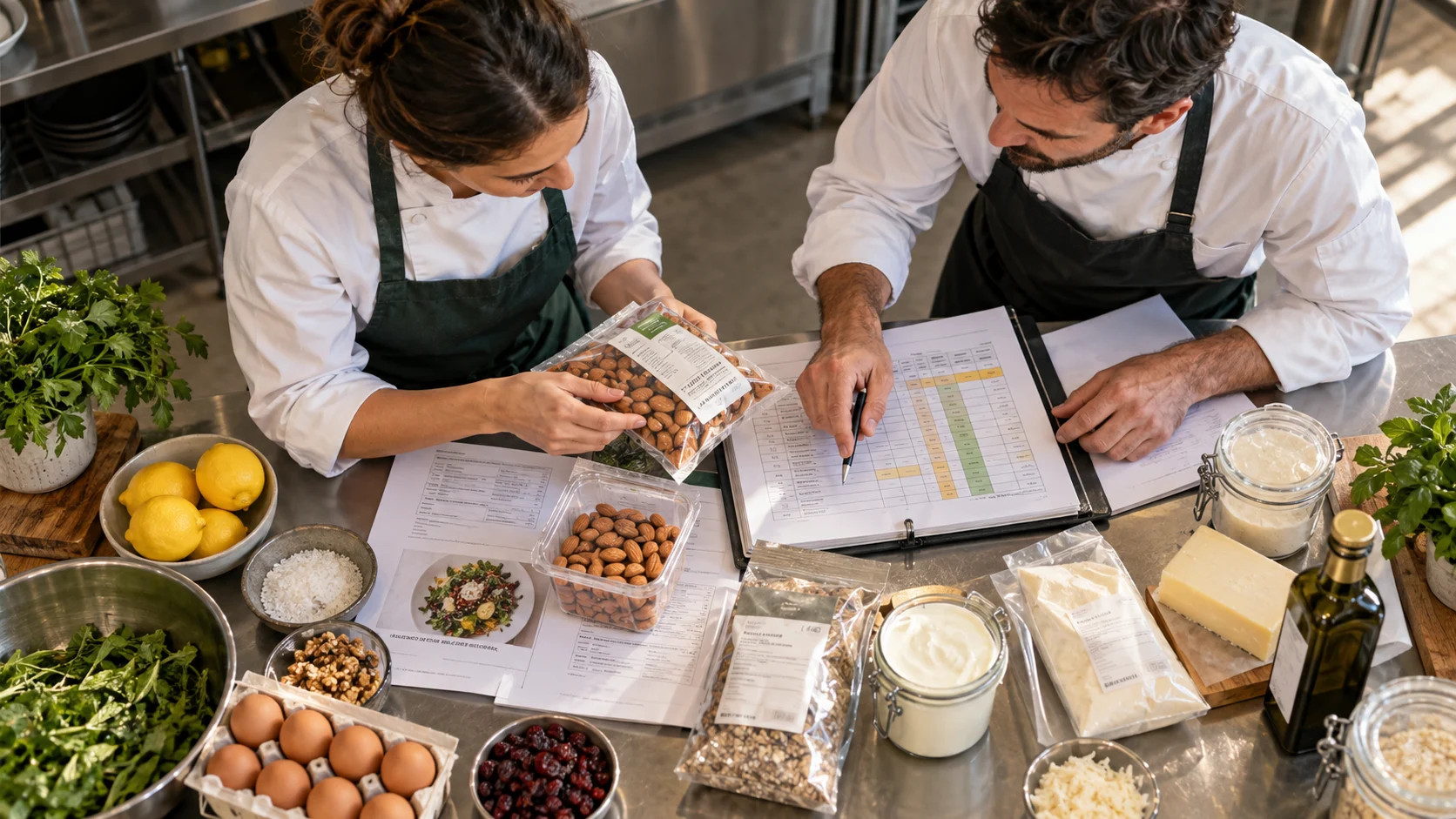
Build from actual ingredient packs and current supplier specifications, not memory. Link every compound ingredient, garnish, cooking medium and default accompaniment to a controlled recipe. The FSA recommends written allergen ingredient information on specification sheets, labels and recipes, kept up to date when recipes change.
Treat a supplier substitution as a stop point. Compare the replacement label and specification before use, update the recipe and customer-facing information, and brief staff. Keep the old version and effective time so the team can answer for food already prepared under the earlier recipe.
Food Standards Agency · Allergen guidance for food businesses
- Give each ingredient, recipe and menu a version and owner.
- Check repeat deliveries as well as new products.
- Block unapproved substitutions from preparation.
- Remove obsolete menus and allergen matrices from use.
Control cross-contact in the actual kitchen
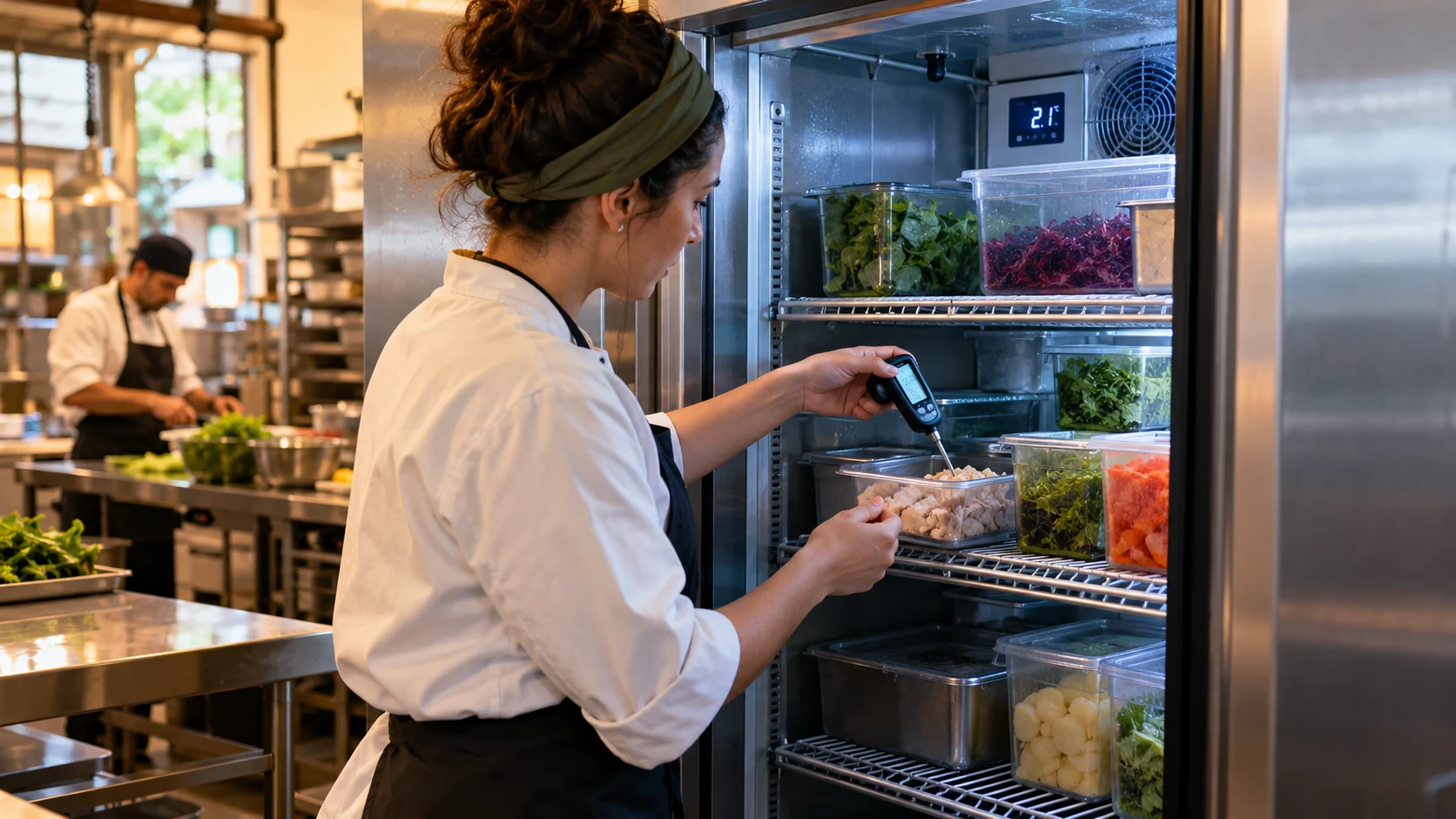
Walk receipt, storage, decanting, preparation, frying, plating and delivery packing. Shared oil, utensils, cloths, garnishes and poorly closed containers can transfer allergens. Choose practical separation, scheduling, dedicated tools or effective cleaning, then state how the shift lead verifies each control.
Do not convert a generic “may contain” statement into a substitute for risk control. If the kitchen cannot prevent relevant cross-contact, tell the customer what cannot be provided and decline the request when evidence is insufficient. Record the decision rather than promising an “allergen-free” meal that the process cannot support.
Food Standards Agency · Precautionary allergen labelling and cross-contamination
- Store allergen-containing ingredients closed, labelled and appropriately separated.
- Check shared fryers, grills, scoops, cloths and pass surfaces.
- Define cleaning instructions and objective release criteria.
- Record residual risk and the authorised customer message.
Design the request handover for busy service
The person taking the order should repeat the request, identify the exact dish and send it to the authorised kitchen lead. The kitchen checks the current recipe and cross-contact route, marks the prepared item and hands the decision back to the server or dispatcher. A note in a till is useful only if the right people see and acknowledge it.
Test the workflow with a realistic drill: an online order arrives during peak service, the usual ingredient has been substituted, and the customer asks about sesame. Measure whether staff find the current evidence, stop an unsafe assumption and deliver one consistent answer. Correct the workflow before relying on it.
Food Standards Agency · Allergen checklist for food businesses
- Capture the exact request without diagnosing the customer.
- Require kitchen acknowledgement and an explicit decision.
- Identify the finished item through service or delivery.
- Record refusals, near misses and improvement actions.
Example record and review decision
Example: a pub receives a replacement burger bun whose specification adds sesame. The receiving check holds the buns, the recipe owner compares the pack and specification, and the menu editor updates the written allergen record before the stock can be released. The audit trail records the product, supplier lot, affected dishes, decision time and staff briefing.
The reviewer does not close the action merely because the matrix changed. They confirm the old menu was removed from the bar and ordering channel, observe one service handover and record whether held stock was correctly identified. If any channel remains stale, the buns stay blocked or the affected dishes are withdrawn.
Food Standards Agency · Allergen checklist for food businesses
- Record the triggering product, lot and evidence.
- List every affected recipe and customer channel.
- Separate containment from final release approval.
- Verify the correction during actual service.
Use Kivloo as the record layer, not a legal shortcut
Kivloo can organise plan reviews, supplier evidence, recipe-change tasks, menu verification, shift checks and incident follow-up in one auditable workflow. Start with one menu section and the five templates linked to this guide; assign owners and test retrieval during a live shift.
Kivloo does not determine whether a meal is safe for a particular person, validate a cleaning method or replace competent food-safety and legal advice. Keep emergency procedures outside the app as well as in accessible records, and review the plan with the relevant authority guidance for the site.
Food Standards Agency · Allergen guidance for food businesses
- Pilot one menu section before a full rollout.
- Attach source evidence rather than copying unsupported claims.
- Keep approvals, changes and failed checks visible.
- Review current product scope on Kivloo’s features and pricing pages.
A few useful answers
Does a UK restaurant need a written allergen matrix?
The required outcome is accurate, accessible allergen information. The FSA’s guidance treats a written recipe or matrix as strong practice and requires written support when information is provided orally. Choose a controlled format staff and customers can actually access.
Can a restaurant promise a dish is allergen-free?
Only make a claim that the ingredients, process and cross-contact controls support. If relevant cross-contact cannot be avoided or verified, explain the limitation and decline the request rather than offer false assurance.
Sources and further reading
- Food Standards Agency · Allergen guidance for food businesses
- Food Standards Agency · Allergen checklist for food businesses
- Food Standards Agency · Precautionary allergen labelling and cross-contamination
- Codex Alimentarius · CXC 1-1969 / HACCP
Explore starter templates
Start with a useful checklist
English