Food safetyCornerstone guides
HACCP guide: seven principles, food safety routines and practical records
Understand the HACCP approach, prerequisites and seven principles, then connect monitoring, corrective actions and verification with practical examples.
At a glance
HACCP is a preventive approach for identifying significant food safety hazards and defining how they are controlled. It builds on good hygiene practices. A useful implementation connects the actual product and process with justified controls, monitoring, corrective action, verification and records; filling in a checklist is only one part of that system.
What HACCP does and how to use this guide
HACCP stands for Hazard Analysis and Critical Control Point. It is a structured way to examine significant food safety hazards and the measures needed to control them. It does not mean that every cleaning task or temperature observation is automatically a critical control point. The decisions belong to a product- and process-specific analysis, supported by suitable knowledge and evidence.
Use this cornerstone as the map of the work. The linked practical guides explain individual records, such as a temperature log or ingredient-change review. Our examples show how information connects; they do not establish a validated food safety plan for your business. The Codex General Principles of Food Hygiene is the primary reference behind the framework.
Codex Alimentarius · CXC 1-1969 / General Principles of Food Hygiene
Put good hygiene practices in place first
A HACCP plan operates within a working food hygiene system. Establish the relevant premises, cleaning, maintenance, personal hygiene, supplier, pest-control and other prerequisite arrangements for the actual business. Keep responsibilities and instructions clear. A polished plan cannot compensate for routine controls that staff do not understand or cannot carry out.
Review ingredients and allergen information alongside operational conditions. When a supplier or recipe changes, identify the records and controls that depend on the old information. Keep unresolved changes visible before use rather than treating a familiar product name as evidence that the previous assessment still applies.
Describe the product and confirm the real process
Define the product, intended use and relevant users, then map how it moves through the business. Include actual receiving, storage, preparation, processing, packing, holding and dispatch steps as applicable. Involve people familiar with the work and check the flow against the site instead of copying a diagram designed for another operation.
Make boundaries explicit: which products, site, equipment and activities are covered, and what requires another assessment? Identify changes between normal operations and less routine situations. A flow diagram is useful when it reveals handovers and decisions; it is less useful when its tidy arrows omit what people actually do.
The seven HACCP principles in practical terms
The Codex approach uses seven linked principles. The following short explanations describe their purpose; the actual analysis, control basis and decisions require the appropriate site-specific work.
1–2. Analyse hazards and determine critical control points
Identify the relevant hazards and control measures, then determine where critical control is needed. Retain the reasoning. A field marked CCP is not evidence that the decision was justified.
3–4. Establish validated limits and monitor control
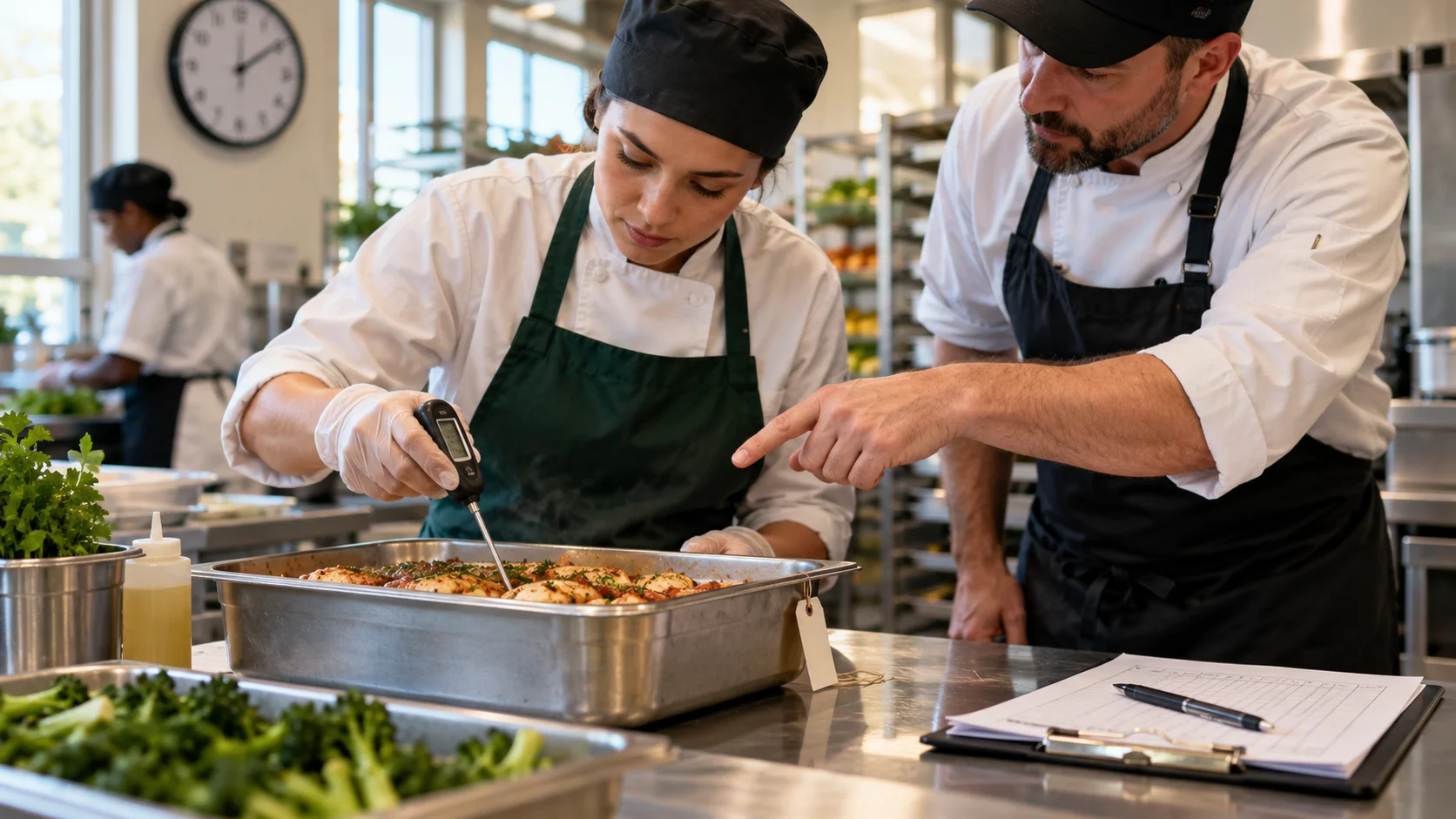
Define the justified limits for each identified CCP and how control will be observed. Specify method, timing, responsibility and the actual information to record. Do not import a limit merely because another establishment uses it.
5. Define corrective actions
Prepare the response to a deviation, including the process and any affected product. Identify who decides, what evidence is needed and how the next check is recorded. Preserve the original observation.
6. Validate the plan and verify its operation
Distinguish evidence that the planned control can achieve the intended outcome from checks that the implemented system operates as intended. A completed daily form alone does not answer both questions.
7. Keep suitable documentation and records
Retain the plan’s basis and the operational evidence needed to understand its application. Connect versions, measurements, deviations, decisions and review, rather than keeping isolated green ticks.
Codex Alimentarius · CXC 1-1969 / General Principles of Food Hygiene
Connect the daily records without making one giant form
Use stable identifiers to connect receiving, ingredient evidence, batch traceability, monitoring and follow-up. The record for a refrigerator and the record for a food batch can be linked while preserving their different subjects. Keep the relevant instruction and version accessible to the person entering the observation.
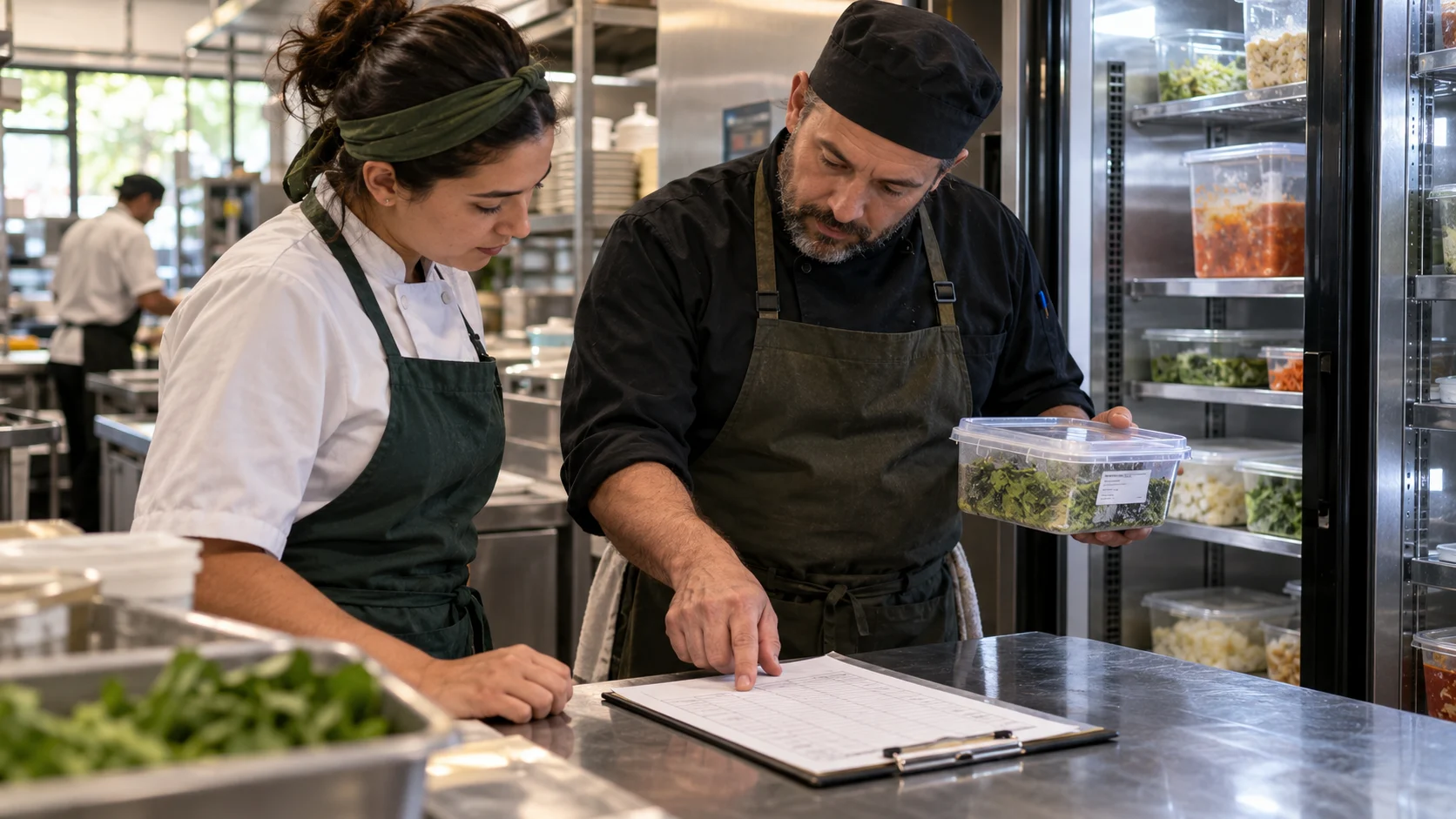
Separate facts from decisions. Operators should record actual observations within their role; the appropriate reviewer records the response or disposition. A missing observation remains missing even when a later check is normal. If a value is corrected, retain the original entry and the reason, author and time of the amendment.
Worked example: a deviation during opening checks
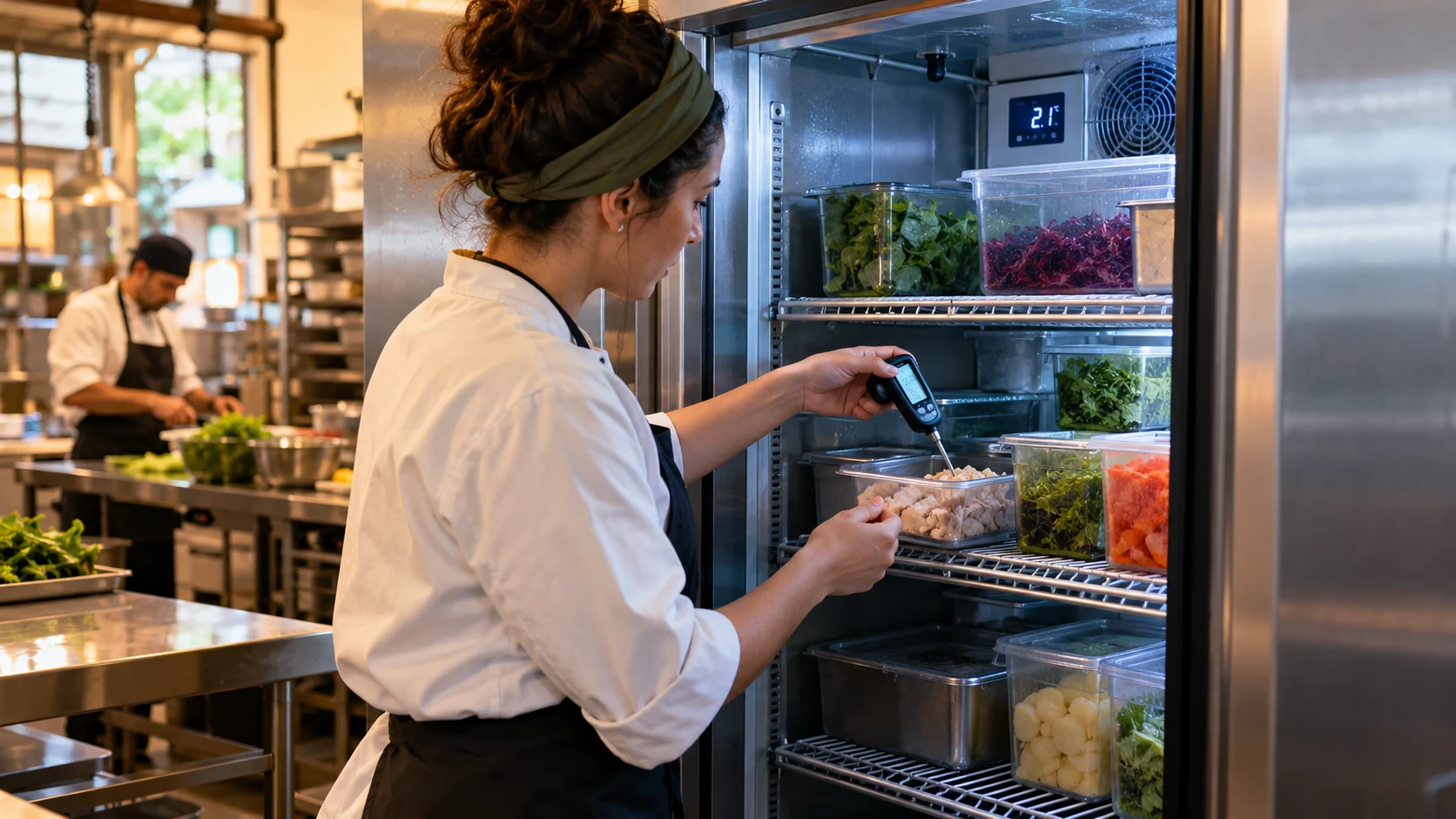
In this fictional workflow, an operator checks COLD-01 under PROC-01 and records an observation outside the site-approved criterion. The record preserves the actual value, method and time. ACT-01 identifies the response, responsible role and potentially relevant stock references. A subsequent check is recorded as a new observation rather than overwriting the first.
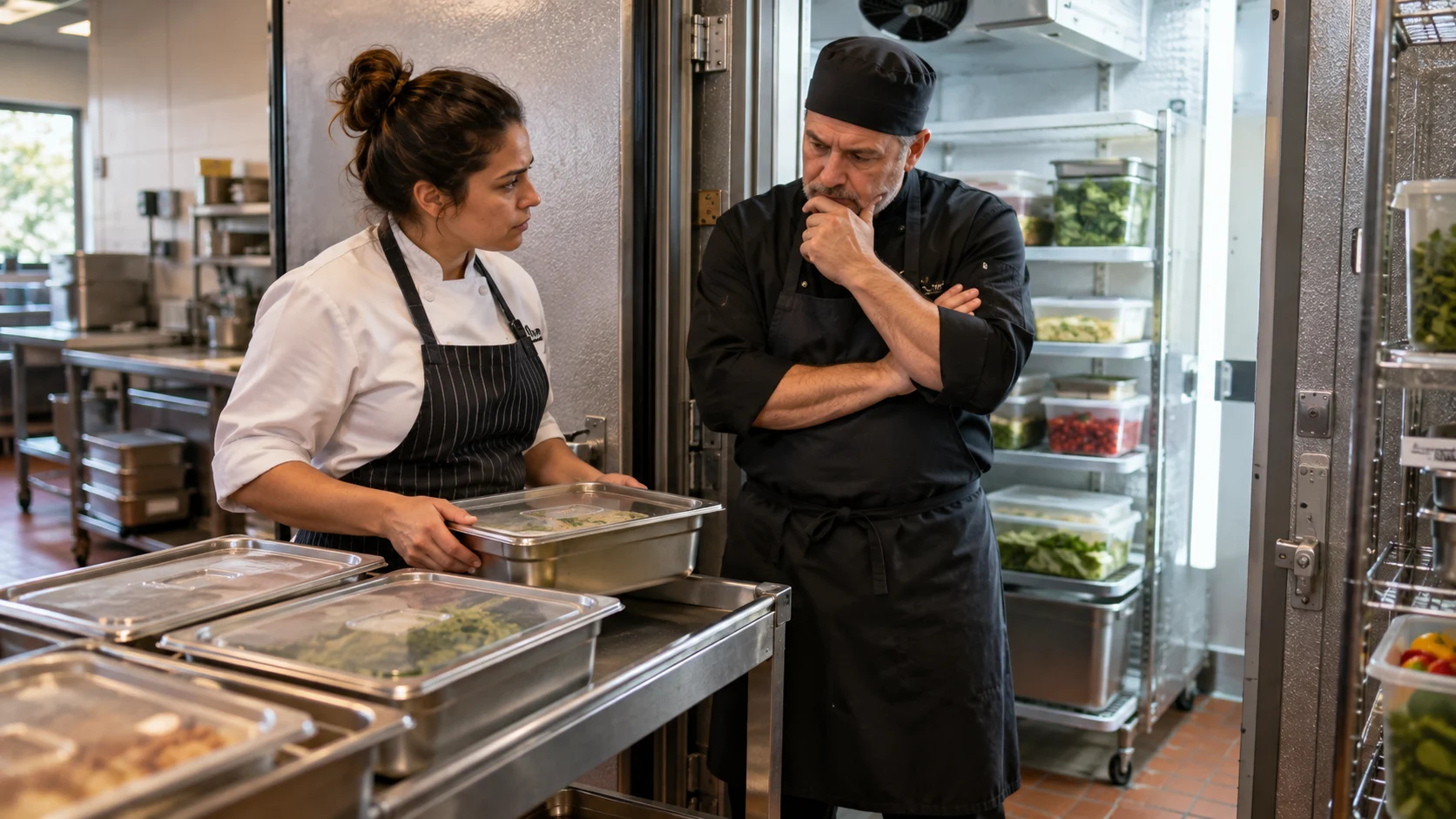
The reviewer records the applicable process and product decisions with their evidence. An equipment repair and a decision about food are separate matters and may have different completion times. The next shift receives the open responsibilities. No universal temperature or product-release decision is supplied by this example; its purpose is to show the evidence chain.
Introduce the system with a controlled pilot
Start with a defined product or process and a manageable group of users. Test an ordinary record, a deviation, a missed check and a change of shift. Ask another reviewer to reconstruct the case from the records alone. Fix ambiguous identifiers, missing decision fields and access problems before adding automation.
When the process or supporting information changes, review what the plan and instructions depend on. Preserve the versions applicable to completed records. Training attendance, practical demonstration and authorisation can serve different purposes; keep their evidence and scope clear rather than treating one signature as everything.
Choose tools by evidence retrieval and review
Paper, spreadsheets and software can all hold records, but each needs controlled definitions, responsibilities and retrieval. Compare them using the same difficult cases and real devices. Test exports, permissions, corrections and any offline behaviour before relying on those features.
For sensors or integrations, verify the exact supported configuration and make data gaps visible. Automation changes collection; it does not remove the need to interpret results and handle exceptions. Choose the arrangement that helps the team maintain accurate evidence and resolve open work, not only the one that produces the most attractive completion dashboard.
Continue reading
A few useful answers
Is HACCP the same as a temperature checklist?
No. Temperature observations can support particular controls, but HACCP includes analysis, justified control decisions, monitoring, corrective actions, validation, verification and documentation. The checklist records only the activities it actually covers.
Does downloading a HACCP template certify the business?
No. A template is a starting structure. The product, process, hazards, controls, competent review and applicable requirements still need to be addressed for the actual business.
Where should a small team start?
Define its actual operation and responsibilities, establish the relevant hygiene practices, then obtain the appropriate knowledge for its hazard analysis and controls. Pilot the records with ordinary and exception cases before broad rollout.
Sources and further reading
- Codex Alimentarius · CXC 1-1969 / General Principles of Food Hygiene
- FAO · Good Hygiene Practices and HACCP Toolbox
Explore starter templates
Start with a useful checklist
English