Food safetyTemperature monitoring
Fridge temperature exceptions: record the response as well as the reading
An exception record should connect an out-of-range reading to the refrigerator, affected stock, immediate response, follow-up measurement and responsible decision. A green status after a second reading does not explain what happened to the food.
At a glance
An exception record should connect an out-of-range reading to the refrigerator, affected stock, immediate response, follow-up measurement and responsible decision. A green status after a second reading does not explain what happened to the food.
Define the decision behind the record
Design the form around the approved exception procedure. Staff need to see who to contact and what information to collect. Do not let a default checkbox silently mark affected products as acceptable when only the equipment has been checked.
Investigate the exception without replacing the first observation
Prepare the exception form before opening checks: include the refrigerator identifier, measurement subject, approved criterion, supervisor and the stock records that may be relevant. The operator should be able to report a result without selecting a release decision outside their role. Define how an absent supervisor is replaced so an entry does not remain unowned.
When a reading deviates, retain its actual value and event time, record the prescribed immediate response and identify the potentially affected stock. Keep the later equipment check on its own line with its method and timestamp. If another instrument or a food measurement is used, identify that change rather than presenting the new number as a correction to the first reading.
At review, establish what the initial observation, follow-up and authorised product decision each demonstrate. Record any period that remains uncertain and the evidence used to assess it. An equipment repair can close a maintenance task while the food-related decision remains open. Test the export by asking a second reviewer to identify both states without calling the operator.
Worked example
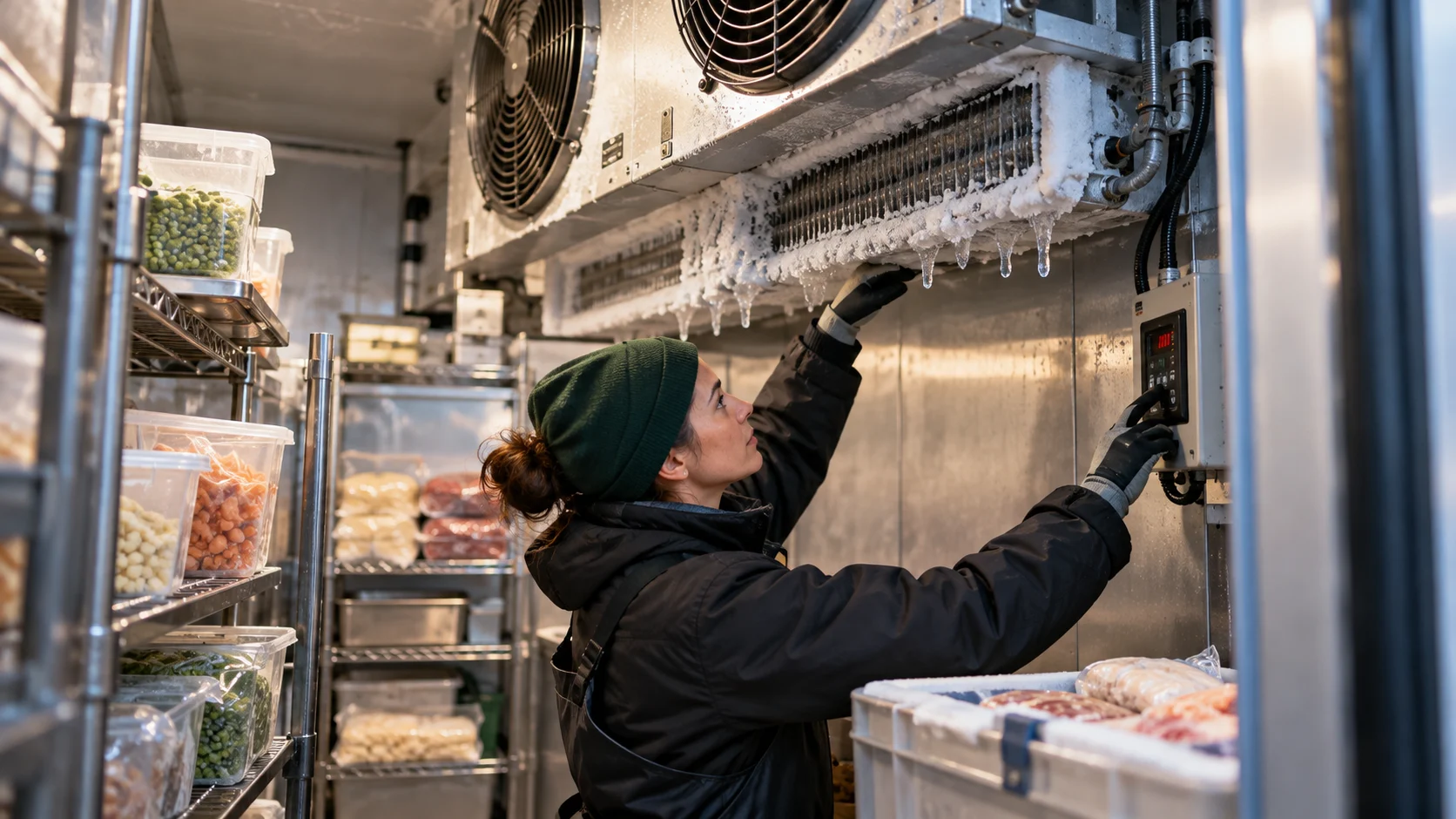
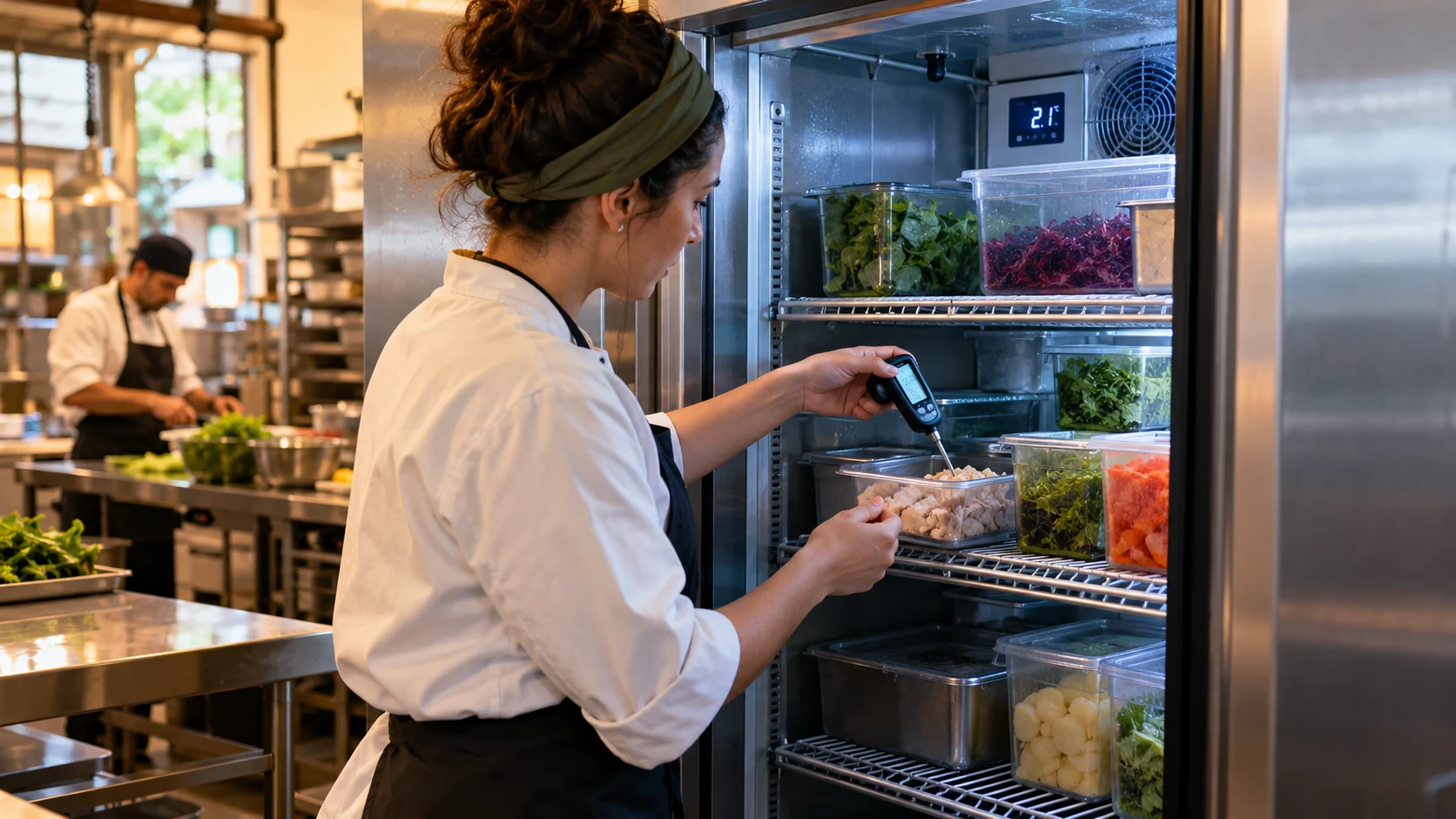
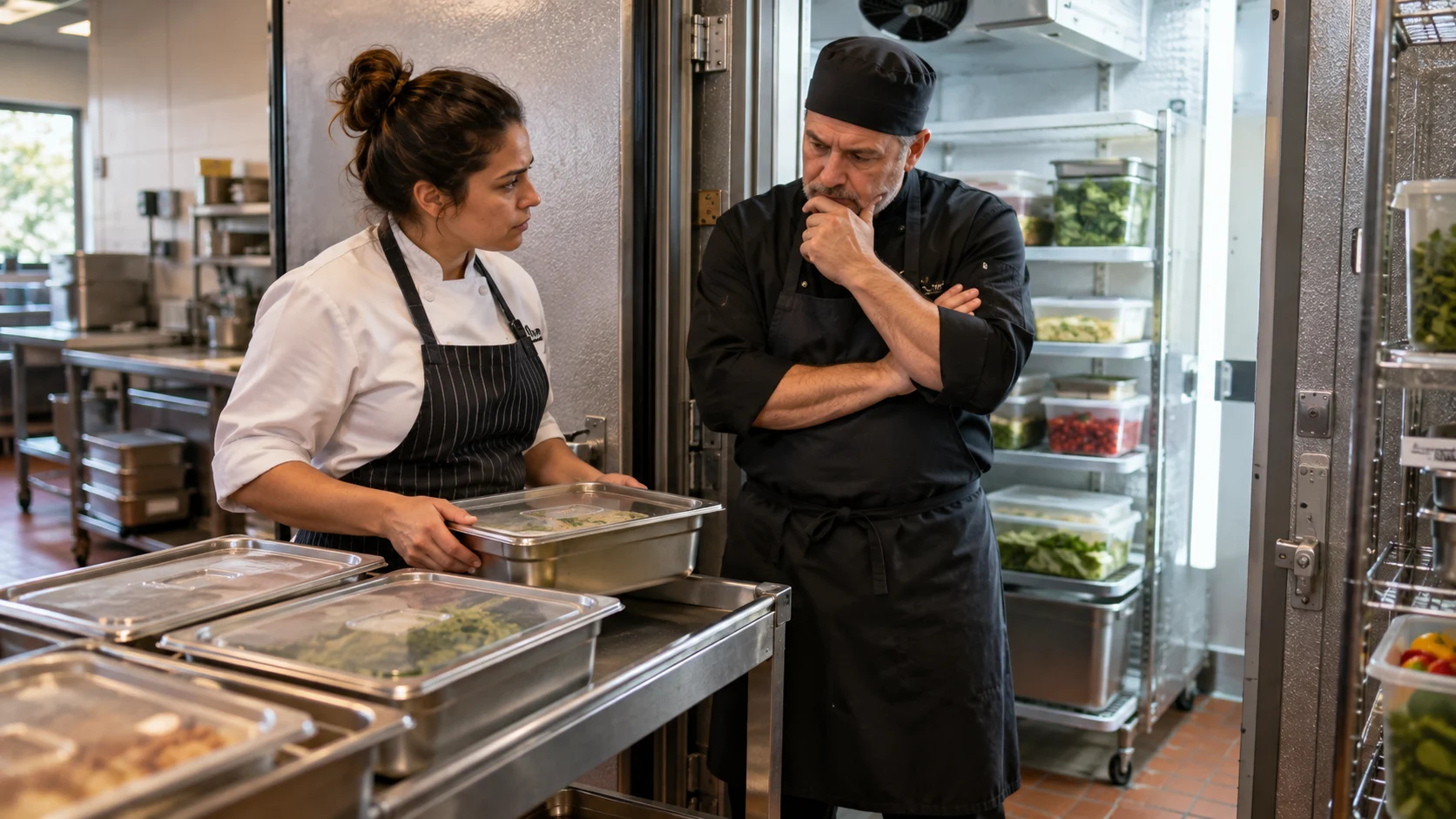
During opening checks, a team finds an unexpected reading on one refrigerator. They preserve the original result, identify the stock and escalate. A supervisor documents the relevant assessment and the next reading; the form does not make the release decision.
Build a usable record
Use the fields below to capture the facts needed for this particular decision. Keep the actual observation separate from any later correction or approval.
- Equipment and location
- Actual reading, method, time and unit
- Potentially affected stock references
- Immediate response and escalation
- Decision owner, follow-up and evidence
Example record and review decision
Fictional record example: COLD-01 / 07:10: original reading; ACT-01: affected stock and response; 07:40: follow-up reading and product decision.
Check the first reading, subsequent equipment condition and food disposition as separate facts. A normal later reading cannot fill an undocumented period.
If the record shows only the follow-up value, retain that value but identify the missing initial observation rather than reconstructing it from memory.
Test the review, not just the form
Give a reviewer only the completed record. Ask whether they can identify the equipment, understand the sequence and find the recorded product decision without asking the operator to reconstruct the event. Fix missing context before adding more automation.
A few useful answers
Can a normal second reading close the exception?
It can be evidence for review, but it does not by itself explain the first result or the status of affected stock. Follow the approved assessment procedure.
Should the follow-up reading overwrite the original temperature?
No. It is a later observation with its own time and method. Preserve the original result and link the follow-up, response and authorised product decision. Correct a transcription error through a separate recorded change rather than using a later measurement to replace history.
Sources and further reading
MarkdownExplore starter templates
Start with a useful checklist
English