HACCP records
Digital HACCP records: build a temperature log your team can actually use
What to put in a digital temperature log, how to record exceptions and how to evaluate HACCP software using a real shift.
Food safety
Form design, missing observations, corrections, procedure versions and supervisory review.
 8guides
HACCP records
What to put in a digital temperature log, how to record exceptions and how to evaluate HACCP software using a real shift.
HACCP records
A monitoring form should identify the control, the required observation, the responsible person and the response to an exception. More fields do not necessarily create a better record if the team cannot tell what decision the form supports.
HACCP records
A missing record should remain identifiable as a gap. Record when it was discovered, the affected check and any investigation or alternative evidence. Do not backfill an invented measurement merely to make the daily completion percentage reach a target.
HACCP records
A correction should preserve the original entry and identify the corrected information, reason, author and time. A record that simply changes in place can become difficult to explain when an investigator compares exports taken on different dates.
HACCP records
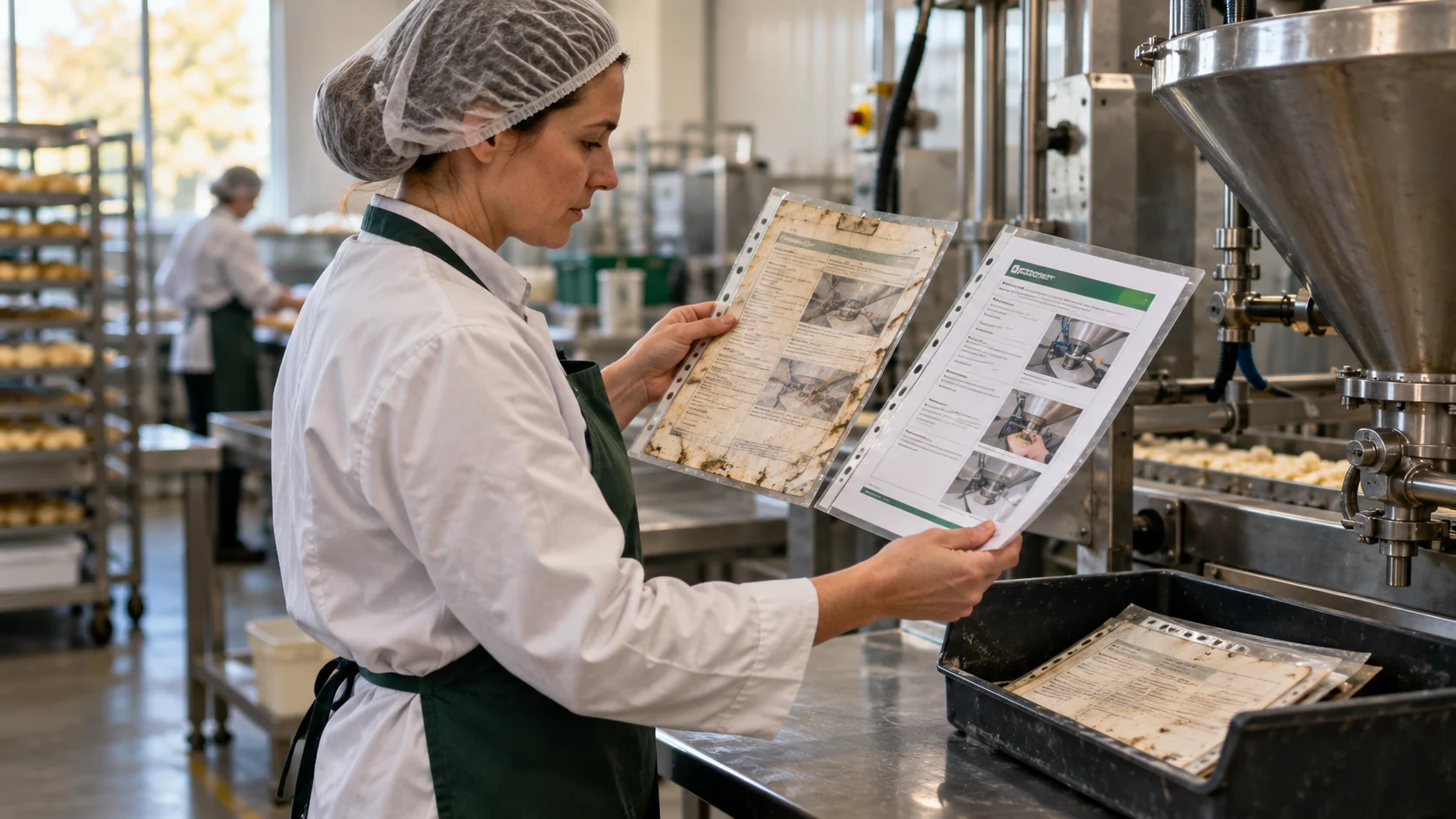
A recorded check should be traceable to the instruction that applied at the time. Keeping only the latest procedure can make older records appear to have followed a version that was introduced after they were completed.
HACCP records
A useful supervisory review checks exceptions, missing observations and open follow-ups as well as completed tasks. A high completion percentage can coexist with an unresolved issue if the dashboard treats every submitted form as satisfactory.
HACCP records
A record migration needs an inventory, a mapping of fields and a way to distinguish historical imports from new digital observations. Copying a paper form’s appearance is less important than preserving the information needed to interpret it.
Cornerstone guides
Understand the HACCP approach, prerequisites and seven principles, then connect monitoring, corrective actions and verification with practical examples.