Food safetyHACCP records
Procedure versioning: show which instruction applied to each check
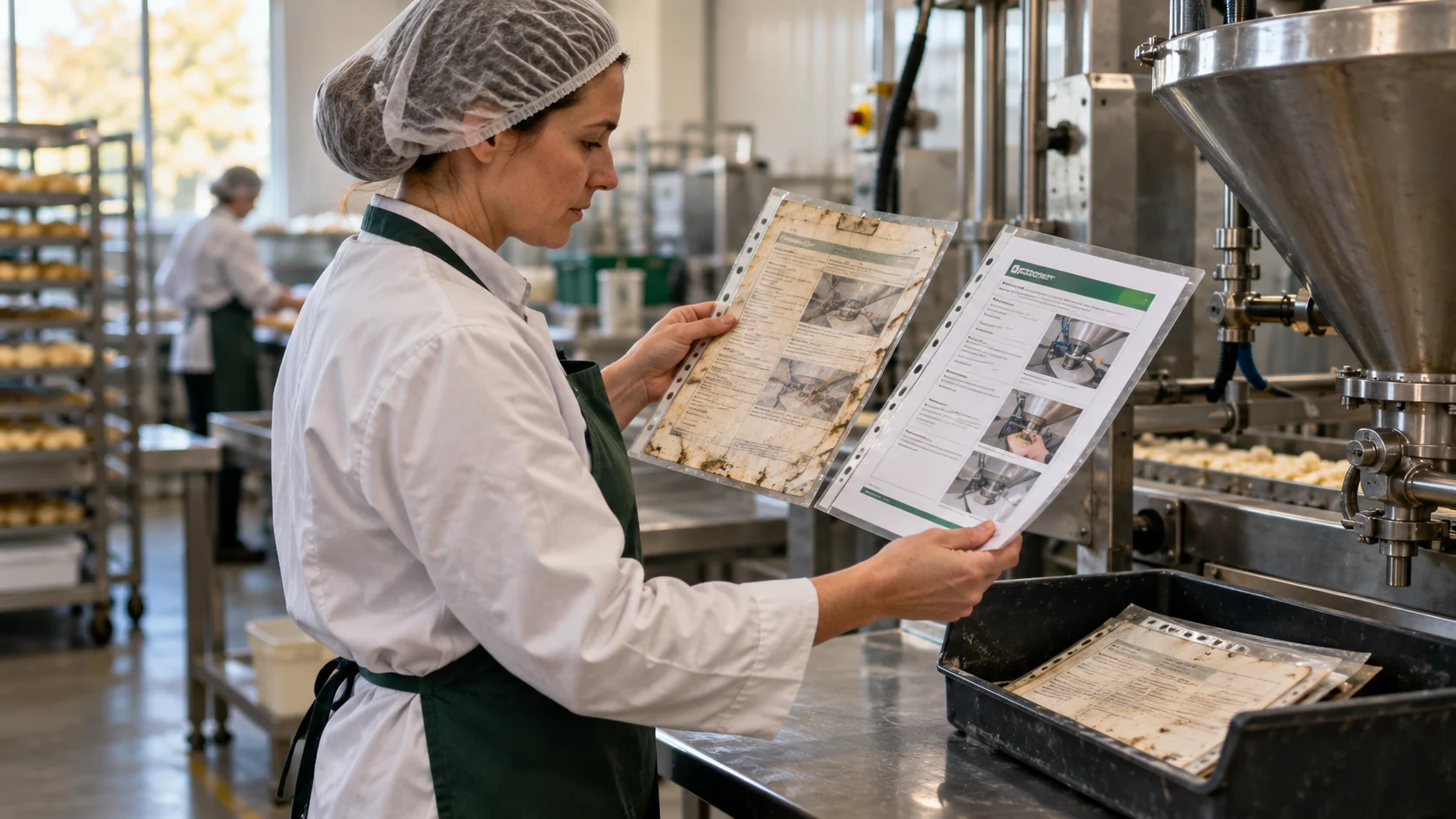
A recorded check should be traceable to the instruction that applied at the time. Keeping only the latest procedure can make older records appear to have followed a version that was introduced after they were completed.
At a glance
A recorded check should be traceable to the instruction that applied at the time. Keeping only the latest procedure can make older records appear to have followed a version that was introduced after they were completed.
Define the decision behind the record
Give procedures stable identifiers, versions and effective dates. Specify who approves changes and how affected staff are informed. Software should distinguish the current instruction from historical versions associated with earlier work.
Keep the instruction that applied when the check occurred
Give each controlled procedure a stable identity, version, approval and effective point. Identify the forms and roles affected by a revision. A publication timestamp alone may not tell an operator whether a new instruction applies to a check already in progress or to a later shift.
Link completed observations to the applicable version. When the procedure changes, communicate the new instruction and retain the historical one with earlier records. If a form displays criteria from a shared configuration, test that changing the configuration does not rewrite the apparent rule beside an old result.
Review one record from each side of the change and ask a colleague to explain which instruction applied. Keep local variations and translated instructions connected to their source version. Treat an unimplemented or disputed revision as a separate status rather than allowing its presence in a file store to imply that the team adopted it.
Worked example
A site changes a monitoring method. The approved version becomes active on a defined date, and future tasks use it. An earlier completed task still links to its previous instruction, allowing the reviewer to understand the record in its original context.
Build a usable record
Use the fields below to capture the facts needed for this particular decision. Keep the actual observation separate from any later correction or approval.
- Procedure identifier and version
- Approval and effective date
- Changed requirement and reason
- Affected templates and roles
- Communication or training reference
Example record and review decision
Fictional record example: PROC-01-v2: instruction applied to CHECK-01; PROC-01-v3: later approved revision with an effective date.
Open a historical record and check that its limits, method and instruction still match the version in use at the event.
Showing only the latest procedure beside an old reading can suggest that a different rule originally applied.
Test the review, not just the form
Retrieve one old record and open its instruction. Then start a new check and confirm it shows the active version. Verify how a scheduled task created before the effective date is handled instead of assuming it updates correctly.
A few useful answers
Should every old record link to the newest procedure?
It should be clear which version applied when the work was done. The latest version may also be available separately.
Can the latest procedure replace every historical instruction link?
It should not silently change the interpretation of past observations. Preserve the applicable historical version and provide the current instruction separately so the reader understands the timing of the change.
Sources and further reading
MarkdownExplore starter templates
Start with a useful checklist
English