Food safetyCleaning and hygiene
Waste-area checks: give a finding an owner and a destination
A waste-area record should identify the area, observed condition, immediate action and follow-up owner. It should help teams distinguish routine collection from a condition that needs investigation, repair or a change in the daily work pattern.
At a glance
A waste-area record should identify the area, observed condition, immediate action and follow-up owner. It should help teams distinguish routine collection from a condition that needs investigation, repair or a change in the daily work pattern.
Define the decision behind the record
Define the observable conditions your site needs checked. A general tidy checkbox can hide problems with damaged containers, access or collection arrangements. Keep the description specific enough for another person to identify the same issue.
Separate collection activity from the condition of the area
Define the waste area’s boundary and the observable conditions the site expects to check. Identify the relevant collection information, access arrangements and escalation roles. The form should distinguish a planned collection from a physical condition that needs a response during the inspection.
Record the actual state of the identified location and any finding with context. Describe whether the observation concerns containment, access, collection or another defined condition. Link the immediate response, responsible owner and the evidence required to verify the intended outcome; avoid an undefined ‘waste issue’ label.
Review both operational follow-up and the result at the area. A booking or contractor message may support the history but does not establish that the condition was resolved. Test a collection completed with a remaining finding and an apparently tidy area with an unresolved access concern. Keep those separate decisions visible rather than treating collection status as the whole inspection result.
Worked example
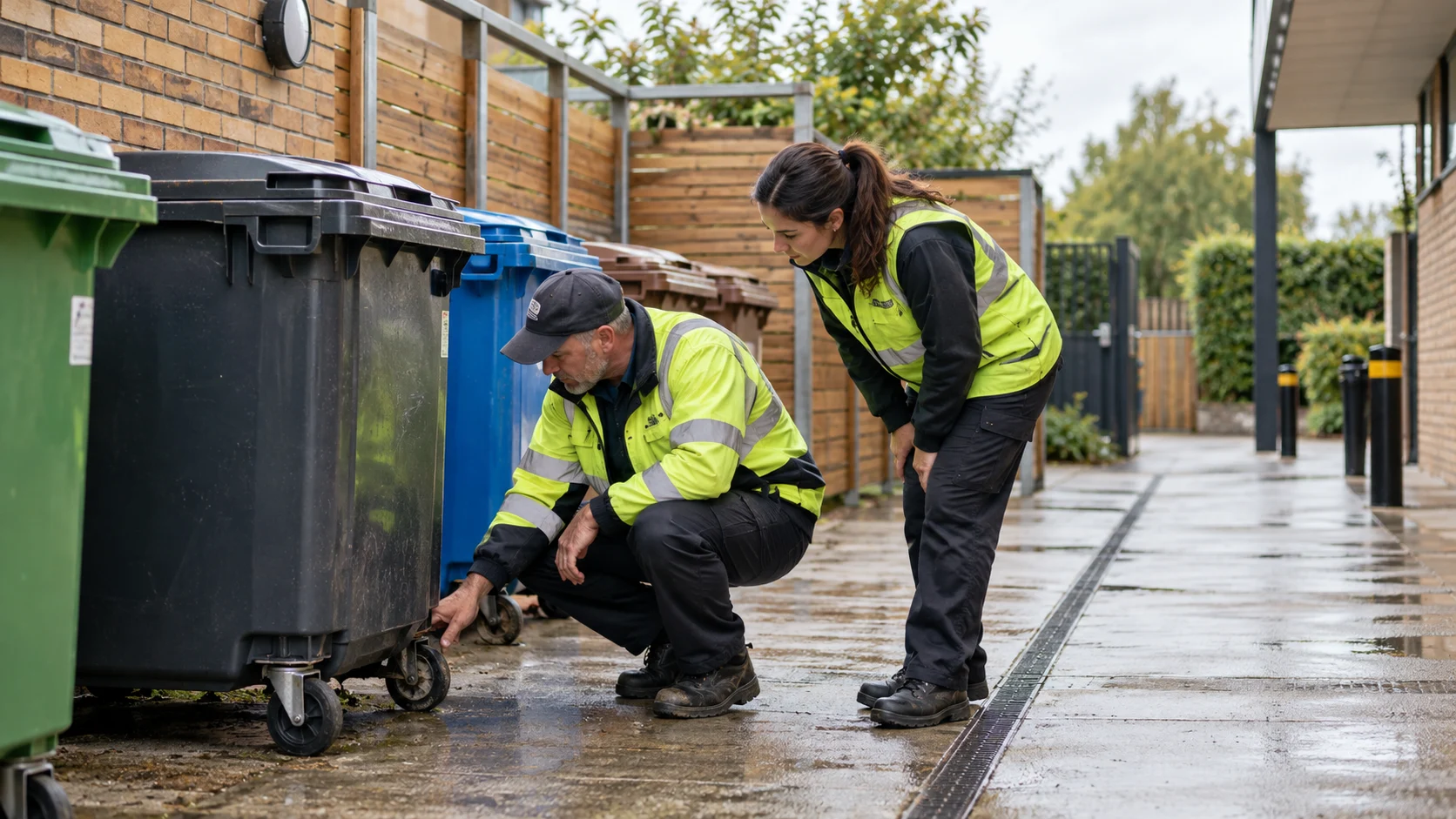
A check finds a damaged container and material outside the designated area. The operator records both facts and follows the immediate procedure. The reviewer separates the collection task from the repair or replacement action so neither disappears when the other is completed.
Build a usable record
Use the fields below to capture the facts needed for this particular decision. Keep the actual observation separate from any later correction or approval.
- Area and container identity
- Actual observed condition
- Immediate response
- Collection or maintenance reference
- Owner and verification date
Example record and review decision
Fictional record example: WASTE-01 / AREA-05: actual condition, collection status and affected access; ACT-05: owner, immediate response and review.
Establish whether the finding concerned waste containment, collection, access or another observable condition.
A collection booking is evidence of planned work, not confirmation that the area was restored and checked.
Test the review, not just the form
Retrieve an example after follow-up. A manager should be able to tell what was collected, what was repaired and whether a recurring pattern needs review. Avoid counting every reopened report as a new independent problem.
A few useful answers
Is waste collection the same as closing an inspection finding?
Not necessarily. Some findings also require repair, investigation or verification beyond collection.
Does booking a collection close the finding?
It records a planned action. The reviewer still needs evidence of the relevant outcome at the area and any other outstanding condition. Link the collection reference to that review rather than treating the booking itself as proof of resolution.
Sources and further reading
MarkdownExplore starter templates
Start with a useful checklist
English