Food safetyCleaning and hygiene
Shared cleaning equipment: record a handover without losing ownership
A handover record should identify the cleaning equipment, its intended area, observed condition and the person accepting it. It helps prevent a shared item from becoming nobody’s responsibility between shifts or locations.
At a glance
A handover record should identify the cleaning equipment, its intended area, observed condition and the person accepting it. It helps prevent a shared item from becoming nobody’s responsibility between shifts or locations.
Define the decision behind the record
Define where items belong and who checks their condition. A form should make damage or an unclear status visible. Avoid relying on a colour alone if staff need an identifier or instruction to understand the designated use.
Transfer a kit’s identity, condition and permitted use
Identify the shared equipment or kit and its designated use under the site procedure. Define which components and condition checks belong to the handover and who can accept or restrict the kit. A shared location is not an adequate identifier when several similar items move between teams.
Record the outgoing and receiving roles, event time, equipment identity and observed condition. Keep outstanding cleaning, defects or use restrictions visible and link the source record. If a component is replaced or separated, retain the relationship rather than signing over a kit whose contents no longer match its recorded identity.
The receiving person should be able to find the relevant instruction and understand unresolved work before acknowledgement. Review whether later cleaning or repair evidence is connected to the handover. Test an ordinary transfer, a restricted kit and a missing component; a single unconditional ‘received’ answer should not conceal the differences between those cases.
Worked example
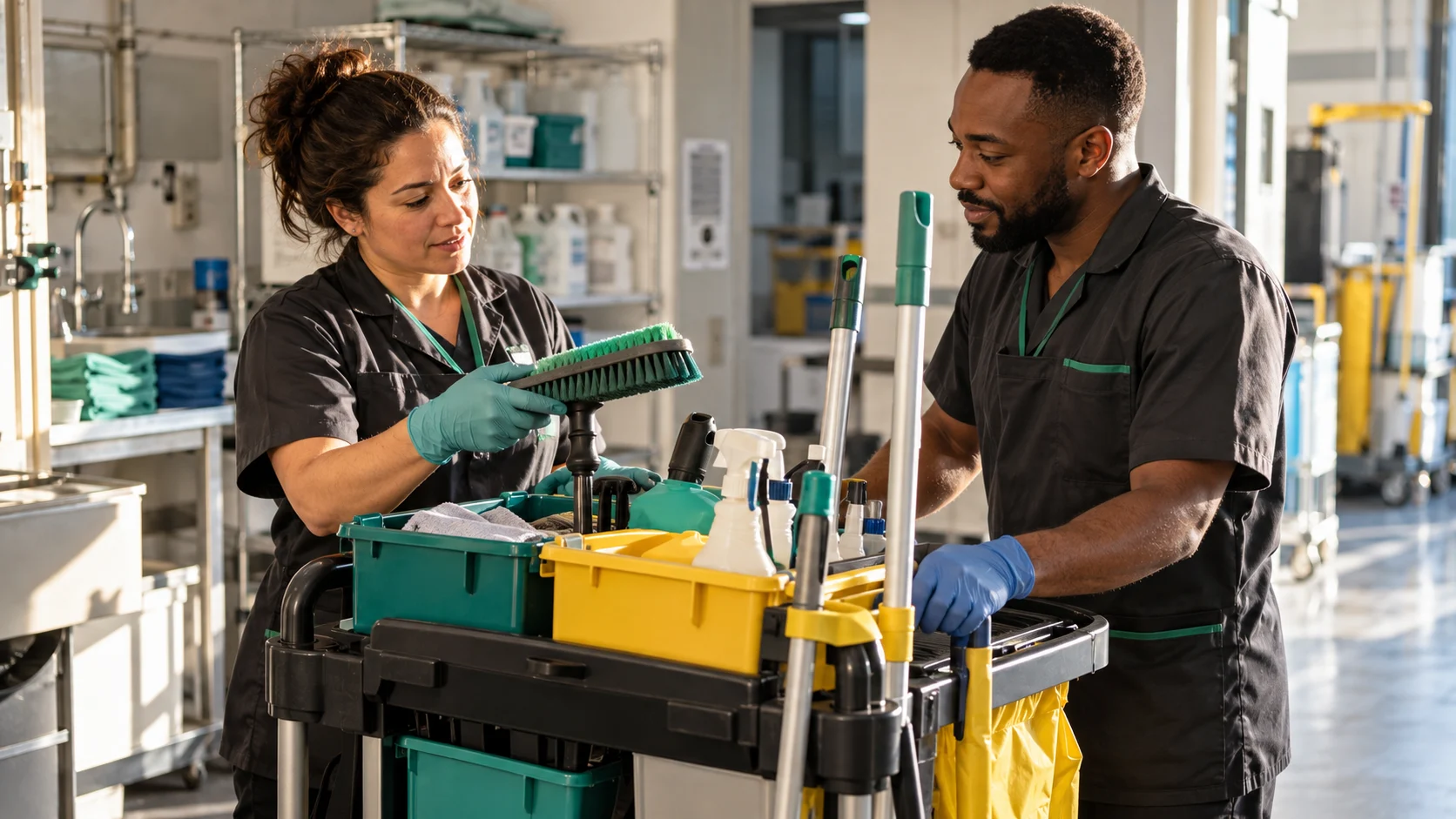
A cleaning trolley moves between two teams. The outgoing operator records its identity and any defect. The receiving operator acknowledges the handover and escalates a problem before assigning the item to a new task.
Build a usable record
Use the fields below to capture the facts needed for this particular decision. Keep the actual observation separate from any later correction or approval.
- Item or trolley identifier
- Designated area or use
- Observed condition
- Sending and receiving roles
- Defect reference and action
Example record and review decision
Fictional record example: KIT-02: equipment identity and designated use; HANDOVER-01: condition, outgoing user, incoming user and outstanding issue.
Confirm the receiving team understands the permitted use and any unresolved condition before accepting responsibility.
Moving a kit between areas without its identity can lose the connection to restrictions or cleaning records.
Test the review, not just the form
Review a handover with a reported defect. Confirm that another person can find the maintenance or replacement action and that a later handover does not erase the earlier report. Keep the check brief enough to use during a busy changeover.
A few useful answers
Does a handover form authorise use of damaged equipment?
No. Follow the site’s approved procedure for defects and restrictions.
Does receipt remove an existing use restriction?
No. The handover transfers awareness and responsibility. Any restriction remains subject to the site’s authorised review and release process, with the supporting decision linked to the equipment record.
Sources and further reading
MarkdownExplore starter templates
Start with a useful checklist
English