Food traceabilityRecipe cost and menu decisions
Food yield percentage: calculate the cost of a usable portion
Divide usable output by the quantity purchased to calculate yield
At a glance
Divide usable output by the quantity purchased to calculate yield. Divide the purchase cost by usable output to find its true unit cost, then multiply by the portion quantity. Keep preparation and cooking yields separate and apply each loss only once.
Define the measurement
Define what the test measures before weighing: purchased ingredient, prepared ingredient or cooked output. Use the same weight basis for the numerator and denominator, with containers tared. Record supplier, lot, preparation method, date and scale. A generic yield table is a starting assumption; test your actual ingredient specification and process before using it as a buying standard.
Example record and review decision
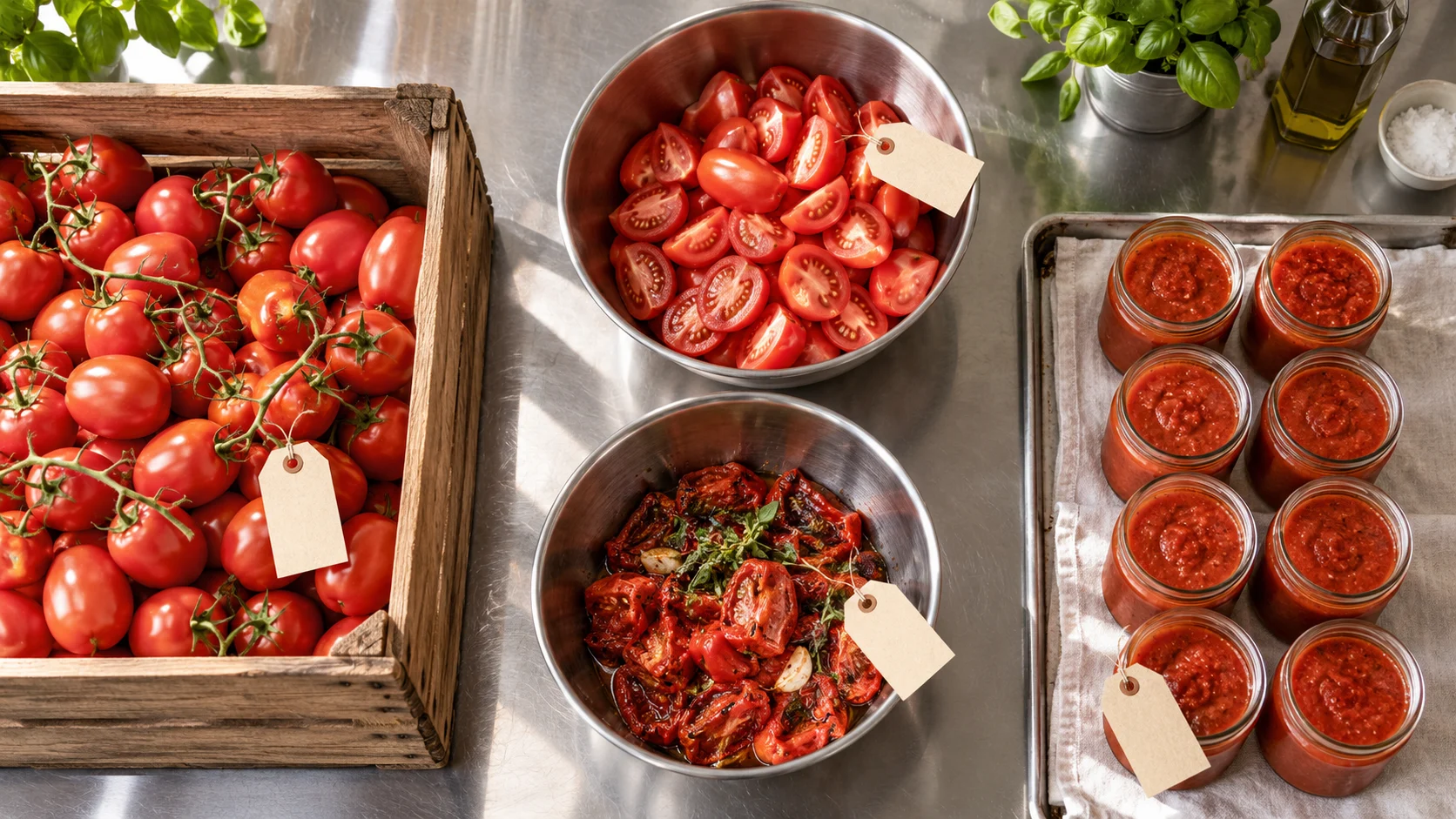
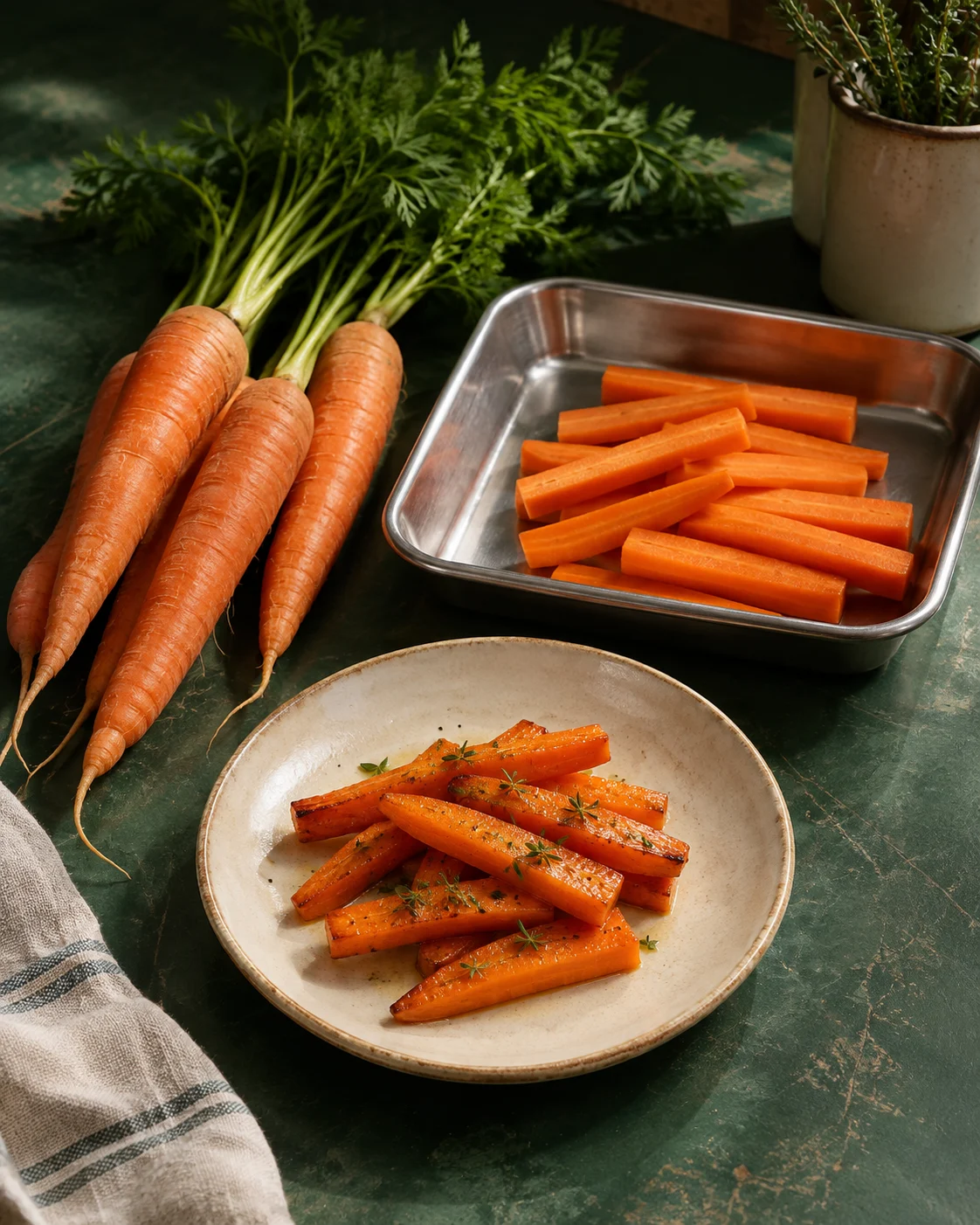
Fictional test: buy 10 kg for €3/kg, or €30 total. Trimming leaves 8 kg usable: 8 ÷ 10 = 80% yield. Usable cost is €30 ÷ 8 = €3.75/kg. At 0.20 kg per prepared portion, this gives 40 portions at €0.75 each. Charging each portion at the purchased €3/kg would miss the preparation loss.
Check the result and its limits
If cooking then leaves 6 kg, cooking yield is 6 ÷ 8 = 75%, while overall yield is 6 ÷ 10 = 60%. A 0.15 kg cooked portion still gives 40 portions at €0.75. Use either the complete two-stage calculation or the overall yield; do not apply the trimming loss again to a cost already expressed per usable kilogram. Added water or mixed ingredients need a separately defined recipe-output measure.
Choose the next action
Compare supplier specifications on a consistent usable basis. A hypothetical €3.20/kg product with measured 90% yield costs about €3.56 per usable kg, versus €3.75 for the €3/kg product at 80%. This comparison excludes different labour, freight, quality and by-product values; it is not a claim that the higher-priced offer always wins. Investigate a yield change before changing portions or the supplier.
Use the downloadable record
The CSV retains prepared-output and cooked-output examples plus a blank test. Replace the purchased weight, total cost, measured output and portion weight, then recalculate. It contains plain values, not automatic formulas. Reject zero output and inconsistent units. Record any separately valued by-product explicitly; do not subtract an assumed recovery or count preparation trim again as a second purchasing cost.
Check the workflow in Kivloo
In Kivloo's procurement beta, recipe quantities and batch yield support ingredient-demand and production-cost calculations. Record your tested standard deliberately and compare it with actual counts and production output. The worksheet is a manual costing aid, not an automatic yield experiment. Web setup and an active connection are required; internal order approval does not dispatch a supplier order. Review the current procurement workflow before relying on its suggestions.
Food yield percentage: calculate the cost of a usable portion
Worked example
| Purchased | Usable | Yield | Portion cost |
|---|---|---|---|
| 10 kg | 8 kg | 80% | €0.75 |
- Purchased
- 10 kg
- Usable
- 8 kg
- Yield
- 80%
- Portion cost
- €0.75
Your record
Download the worked CSVA few useful answers
Does the CSV recalculate after editing?
No. It contains plain worked values and a blank record. Recalculate after changing inputs, keep units consistent and verify the result before using it.
Are the examples measured business results?
No. They are fictional planning examples with explicit assumptions, not evidence of savings or a guaranteed outcome.
Sources and further reading
MarkdownExplore starter templates
Start with a useful checklist
English