Food traceabilitySupplier cost control
Partial deliveries: what is still missing?
Keep the undelivered purchase quantity separate from stock that arrived but is held. Reconcile each receipt against the same order, then review usable stock and confirmed arrival times before proposing another purchase.
At a glance
Keep the undelivered purchase quantity separate from stock that arrived but is held. Reconcile each receipt against the same order, then review usable stock and confirmed arrival times before proposing another purchase.
Start with one order line and one unit
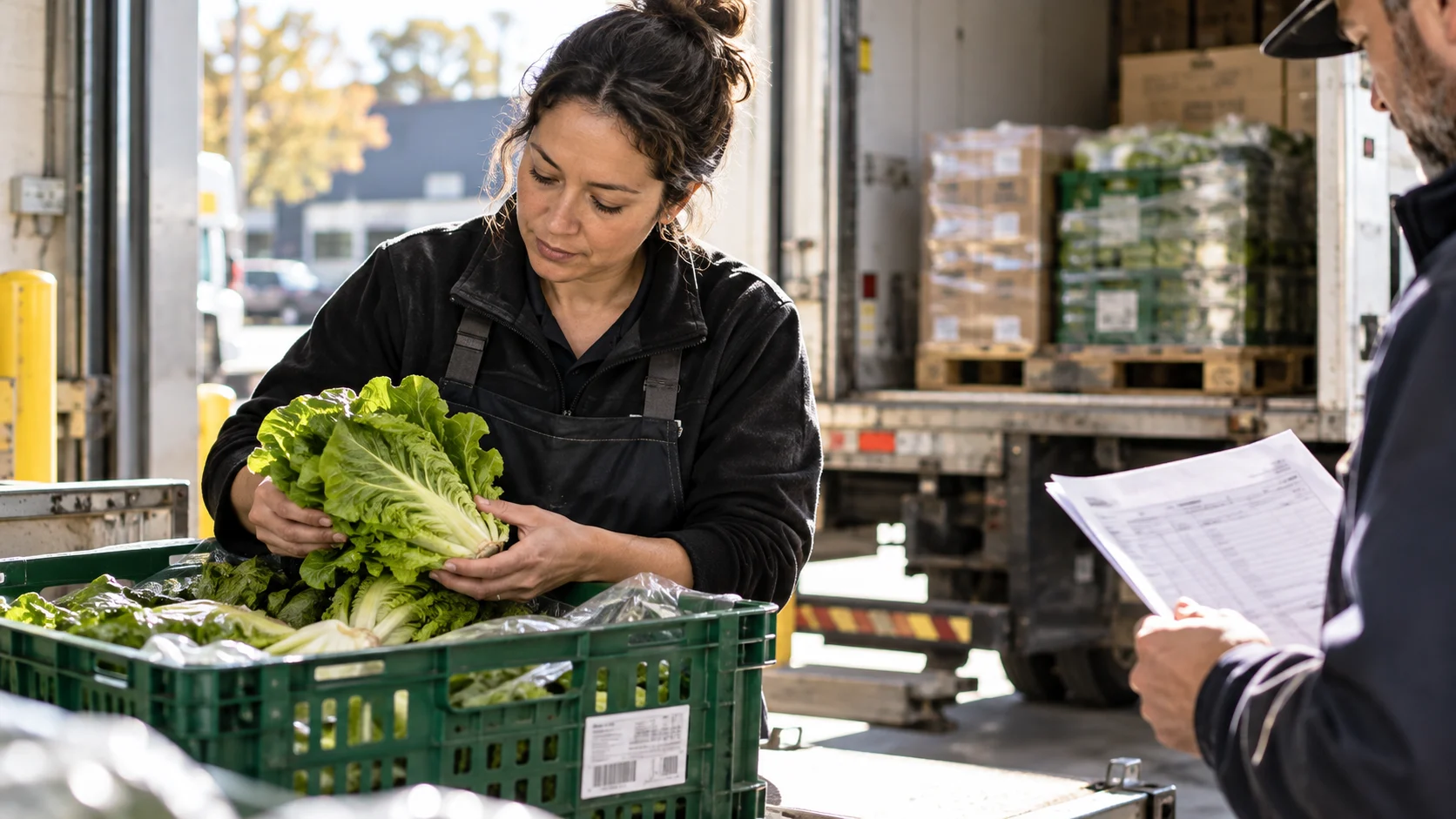
Identify the supplier, order, product and agreed unit before comparing quantities. A case is not a kilogram: retain the actual pack conversion and match the delivered specification. Check the physical delivery against the order and accompanying document, recording discrepancies rather than copying the ordered quantity into a receipt. The calculations below concern one fictional line, PO-01 / ITEM-01, ordered as four packs of 6 kg: 24 kg in total. They assume no consumption, transfer, expiry, return or cancellation between the two checks.
BC Cook Articulation Committee · Basic Inventory Procedures · English
Record the first receipt without closing the order
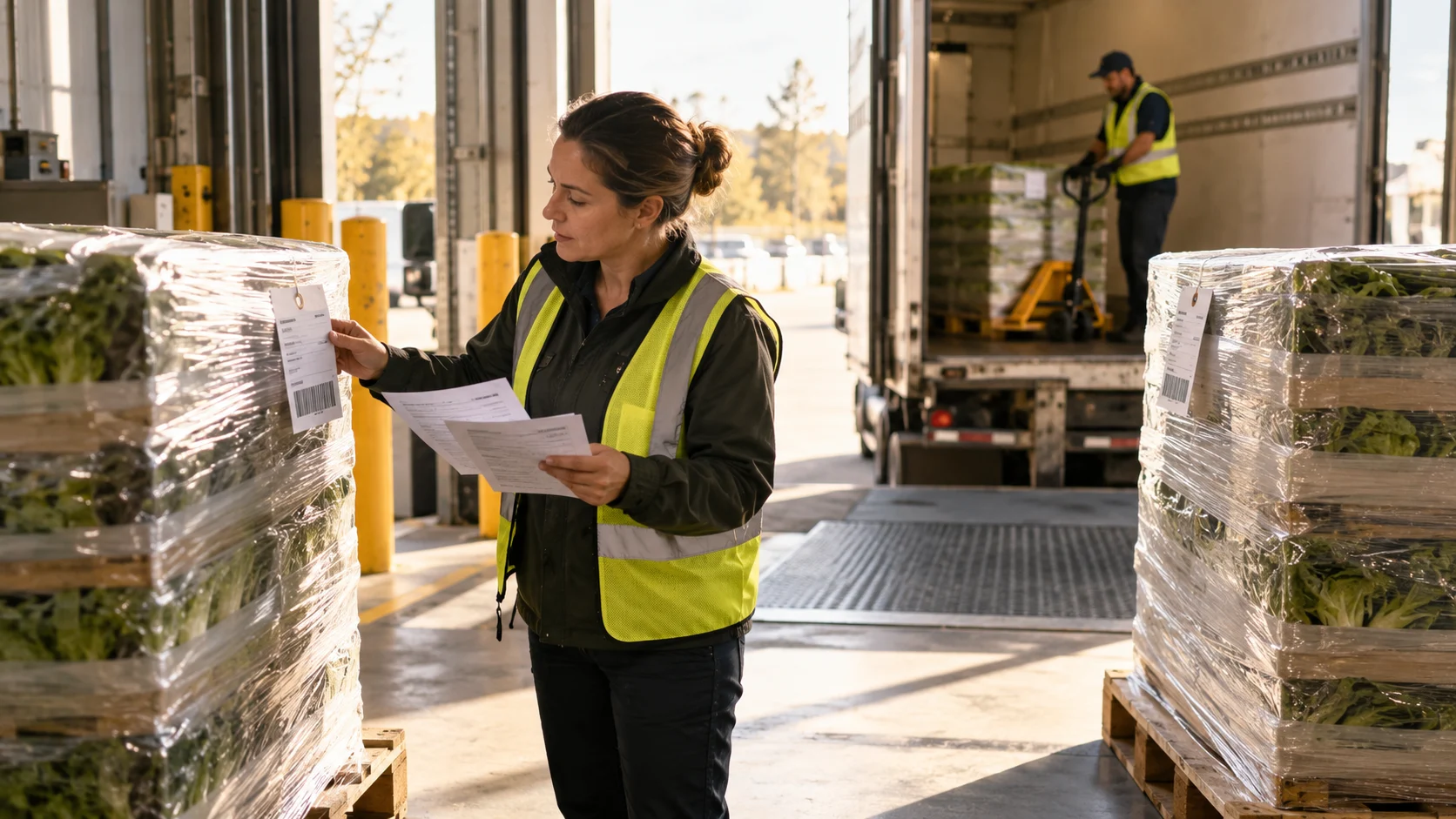
At the first fictional check, receipt R1 brings 12 kg. Of this quantity, 10 kg is recorded as released and 2 kg remains held for the site's review. Thus 12 = 10 + 2 kg has physically arrived, while 24 − 12 = 12 kg has not arrived. Record the lot references and the reason for the hold separately. The arithmetic does not establish that the released stock is suitable for a particular use; the authorised checks and actual condition still govern that decision.
Calculate the remaining purchase quantity
Receipt R2 later adds 6 kg, all recorded as released in this example. Cumulative receipts are 12 + 6 = 18 kg. Released stock is now 10 + 6 = 16 kg, with 2 kg still held. The undelivered balance is 24 − 18 = 6 kg. Calculating 24 − 16 = 8 kg would wrongly treat the held quantity as undelivered. The worksheet's R1 and R2 rows are successive cumulative snapshots, not two quantities to add together: adding 12 and 18 would invent a 30 kg receipt.
Microsoft Learn · Partial receipts in Business Central · English
Turn the service requirement into a reviewed gap
Suppose the service requirement is 20 kg, with no other usable stock. The supplier has not confirmed the remaining quantity's arrival time, so no future delivery qualifies for inclusion in this service window. The planning gap excluding unconfirmed supply is 20 − 16 = 4 kg. Zero counted confirmed supply does not mean the supplier promised zero: its quantity and timing remain unknown. This gap is not an instruction to buy 4 kg. Review the delivery window, pack size, minimum order, usable life and what may still arrive from PO-01. With the same 20 kg requirement, the R1 planning gap was 20 − 10 = 10 kg.
Ask the supplier what will actually happen
Ask the supplier to confirm the exact outstanding line, quantity and timing. Keep a proposed replacement purchase separate from a confirmed amendment or cancellation of the original balance. A shortage, hold or complaint does not automatically create a credit note, replacement shipment or agreement to cancel. Record the response, buyer and next action, and verify any changed commitment before approving the next order. Handle invoice disputes with the invoice records rather than changing physical receipt history to make a balance disappear.
Use the worksheet as a record, not an automatic order
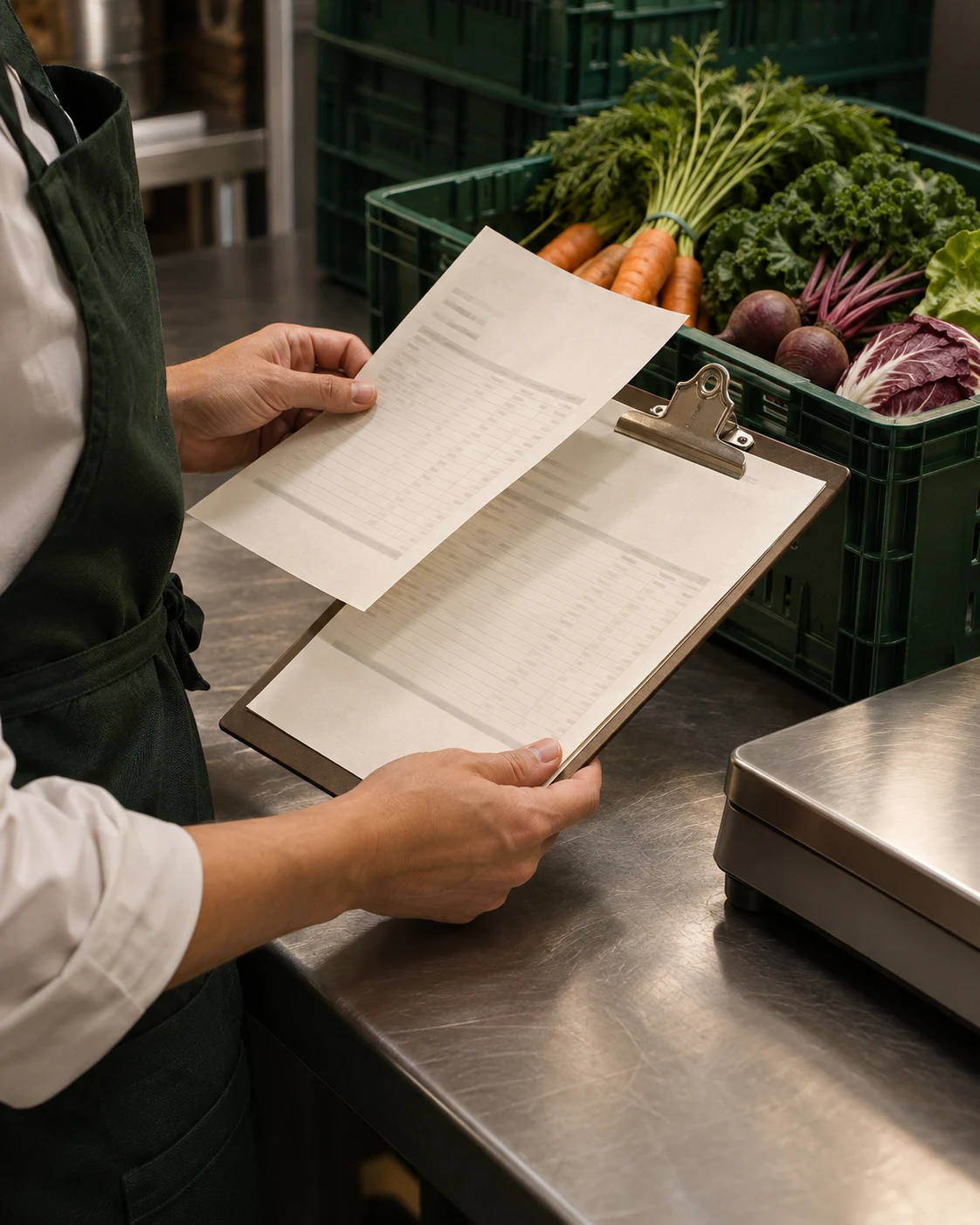
The localized CSV contains both complete fictional snapshots and an editable blank record. Fields distinguish ordered, newly received, cumulative received, released, held, undelivered, required, counted confirmed and planning-gap quantities, plus supplier confirmation and ownership. It contains fixed values and does not recalculate after edits or send an order. Replace the fictional references and recompute each relationship using actual records. Preserve an unknown confirmation as unknown; do not sum cumulative snapshots or assume a held item has been rejected or returned.
Test the actual receiving workflow
Kivloo's current receiving model accumulates received quantities against an approved order and keeps quarantined lots separate from eligible consumption. Test your actual partial-receipt and held-lot case before adoption. Document scanning extracts information for human review; it does not approve stock or establish supplier agreement. Setup is performed on the web, and current document-scanning and invoice workflows are web-only and require online access. Internal approval is separate from external supplier dispatch. This worksheet does not demonstrate automatic matching, replacement buying or credit recovery.
Partial deliveries: what is still missing?
Fictional R2 snapshot: 20 kg required; no other stock or counted confirmed supply
| Ordered | Received | Released | Held | Undelivered | Planning gap |
|---|---|---|---|---|---|
| 24 kg | 18 kg | 16 kg | 2 kg | 6 kg | 4 kg |
- Ordered
- 24 kg
- Received
- 18 kg
- Released
- 16 kg
- Held
- 2 kg
- Undelivered
- 6 kg
- Planning gap
- 4 kg
Your record
Download the purchase-balance CSVA few useful answers
Does held stock increase the undelivered balance?
Not when it has physically arrived and remains recorded as received. In this fictional case, 18 kg arrived, including 2 kg held, so 6 kg remains undelivered. A later return or cancellation requires its own documented treatment.
Can I order the 4 kg planning gap immediately?
Treat it as a proposal. Check actual stock, pack constraints, timing and the original supplier's response first. Otherwise the old balance and a replacement order may both arrive.
Sources and further reading
- BC Cook Articulation Committee · Basic Inventory Procedures · English
- Microsoft Learn · Partial receipts in Business Central · English
- Kivloo · Current features · English
Partial deliveries: what is still missing?
Download the purchase-balance CSV